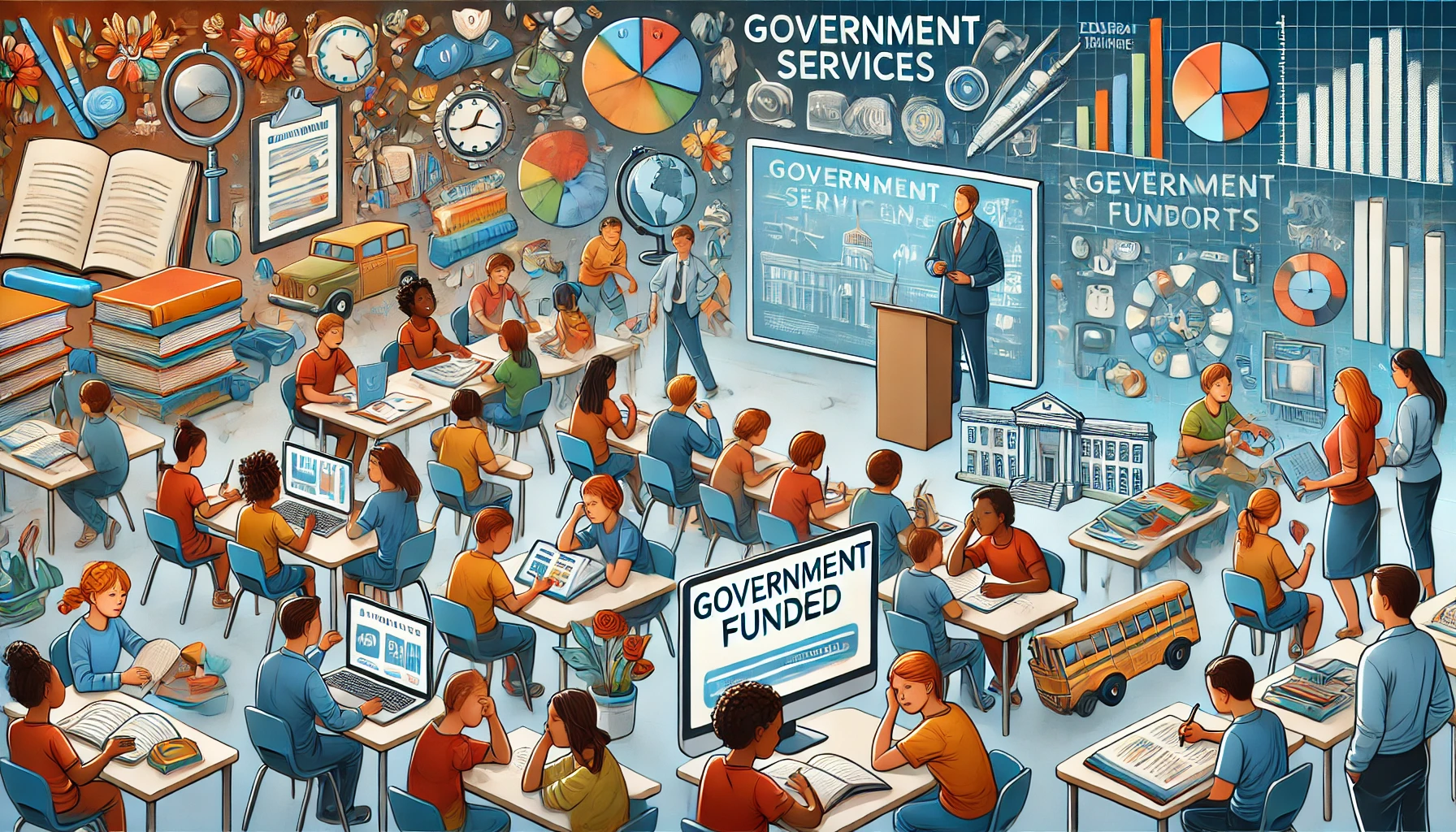
The Impact of Government Services on Education: Insights and Challenges
Introduction
Education is a fundamental pillar for individual growth, economic stability, social justice, and innovation. Its importance extends beyond personal success, underpinning the growth and development of entire nations. Government services play an essential role in shaping education through policies, funding, infrastructure development, and ensuring equitable access to quality education.
In this comprehensive article, we will explore the detailed impacts of government services on education, focusing on both their successes and persistent challenges, and providing practical solutions for future improvement.
Looking for guidance on education-related government services? Cyber Mfukoni can help you navigate policies, funding opportunities, and educational programs through our consultation service.
Government Services Consultation
Get expert consultation for any government service, application, or process. Personalized guidance f...
1. Government's Role in Education
Historical Context
Historically, education was primarily the domain of religious institutions or private entities, accessible mostly to privileged groups. Governments started becoming more involved in education as societies recognized its crucial role in fostering civic responsibility, economic growth, and national unity. In the late 19th and early 20th centuries, many countries adopted compulsory education laws, significantly increasing literacy and educational participation. For instance, in Kenya, the introduction of free primary education in 2003 represented a landmark shift, greatly enhancing literacy rates and ensuring that millions of children could access education irrespective of their socioeconomic backgrounds.
Over the years, governments have continued to refine educational policies, often expanding their roles from mere facilitators to active stakeholders who shape educational outcomes. By emphasizing universal education and equity, governments have progressively broadened access and improved educational opportunities for marginalized communities, reflecting evolving global standards and expectations.
Current Role and Responsibilities
Today, governments worldwide play an extensive and multifaceted role in education. Their responsibilities include not only formulating educational policies but also implementing and monitoring them effectively. Governments allocate budgets, manage resources, oversee curriculum development, and establish standards to maintain education quality and relevance. They also build and maintain educational infrastructure, ensuring schools are equipped with necessary facilities like classrooms, libraries, and laboratories.
Additionally, governments are tasked with ensuring that education is inclusive and equitable. They implement targeted initiatives to support historically marginalized populations, including persons with disabilities, girls, minority communities, and economically disadvantaged groups. They also regulate and oversee teacher qualifications and professional development, recognizing that teacher quality is directly linked to student success and educational effectiveness.
Educational Bodies and Their Functions
In Kenya, several key bodies manage different aspects of education, each fulfilling crucial functions to ensure cohesive and efficient education delivery:
Ministry of Education: The central body responsible for formulating educational policies, overseeing curriculum design, setting quality standards, and ensuring their implementation. It also coordinates national examinations, manages educational funding, and monitors schools' compliance with educational laws and standards.
Teachers Service Commission (TSC): An independent agency tasked with recruiting, training, registering, and managing teachers across Kenya. TSC ensures teachers receive ongoing professional development and adequate remuneration, playing a critical role in maintaining high educational standards.
Kenya Universities and Colleges Central Placement Service (KUCCPS): Responsible for placing students into higher education institutions based on their academic performance. KUCCPS ensures transparency and fairness in admissions, facilitating equitable access to higher education opportunities.
Beyond these bodies, governments also engage with local communities, non-governmental organizations (NGOs), and international partners to supplement educational programs, particularly in remote or underserved areas. This collaboration ensures comprehensive coverage and maximizes the impact of educational investments.
Thus, government involvement in education has grown increasingly intricate, reflecting a deeper understanding of education’s role in national development, social cohesion, and global competitiveness. Despite varied successes, challenges persist, necessitating ongoing policy adjustments, continuous stakeholder engagement, and sustained financial commitment.
2. Government-Funded Educational Programs and Their Impact
Primary and Secondary Education Programs
One of the most transformative educational policies implemented by governments worldwide is the provision of free primary and secondary education. In Kenya, the introduction of free primary education in 2003 marked a significant milestone, drastically increasing enrollment from approximately 5.9 million to over 10 million students. The removal of tuition fees allowed children from low-income families to attend school, substantially reducing the barriers previously hindering educational access. Furthermore, in 2008, the Kenyan government expanded this initiative by introducing subsidized secondary education, further bridging the gap between primary and secondary education.
However, the massive influx of students posed serious challenges, including overcrowded classrooms, inadequate learning materials, and overstretched teaching resources. Many schools, especially in rural regions, struggled to accommodate increased numbers, affecting overall education quality. Despite these difficulties, the policy significantly boosted literacy rates and educational attainment, showcasing the tangible benefits of government intervention.
Higher Education and Financial Support Programs
Recognizing the importance of higher education in cultivating a skilled workforce, governments have established various financial assistance programs aimed at increasing accessibility for disadvantaged students. In Kenya, initiatives such as government scholarships, bursaries, and the Higher Education Loans Board (HELB) loans provide crucial financial support, enabling economically challenged students to attend universities and colleges. These financial interventions have significantly increased enrollment in higher education institutions, empowering individuals from diverse socioeconomic backgrounds.
The effectiveness of such programs is evident in the rising number of skilled professionals contributing to national economic development. By alleviating the financial burden, governments help nurture a more equitable higher education landscape, promoting social mobility and reducing inequality. Nevertheless, challenges remain, such as delayed loan disbursements, inadequate funding, and insufficient awareness of available financial assistance options among potential beneficiaries.
Technical and Vocational Education and Training (TVET)
Government-funded Technical and Vocational Education and Training (TVET) programs play a pivotal role in addressing unemployment, especially among youth. TVET institutions offer practical, hands-on training in fields like automotive engineering, construction, electronics, hospitality, and healthcare, directly aligning educational outcomes with labor market demands. Graduates of these programs typically secure immediate employment opportunities, positively impacting individual livelihoods and broader economic productivity.
In Kenya, significant government investment has bolstered the capacity and quality of TVET institutions, modernizing infrastructure, equipment, and curricula. Collaborations with industry stakeholders ensure that training programs remain relevant and responsive to market needs. Nevertheless, TVET programs still face issues, including societal stigma that undervalues vocational education compared to university degrees, limited awareness among youth about potential opportunities, and insufficient funding for continued expansion and upgrading of facilities.
Overall, government-funded educational programs have profoundly influenced educational access, equity, and quality, demonstrating the essential role of governmental intervention. However, persistent challenges indicate the need for sustained policy refinement, increased resource allocation, and improved administrative efficiency to fully realize these initiatives' transformative potential.
3. Key Insights on Government’s Educational Services
Improved Access to Education
One of the most notable insights from government intervention in education is the significant improvement in access to educational opportunities. Government-funded initiatives such as free primary and subsidized secondary education have markedly increased enrollment rates across both urban and rural areas. In Kenya, this approach has contributed to nearly universal primary school enrollment, drastically reducing the number of out-of-school children. These initiatives have successfully bridged historical gaps, enabling children from disadvantaged backgrounds to receive basic education.
Moreover, the expansion of secondary education accessibility has provided continuity, ensuring that students can further their education without prohibitive financial barriers. The increased enrollment also signifies greater national literacy levels, better employment opportunities, and long-term socioeconomic advancement.
Enhanced Quality of Education
Governments have not only focused on expanding educational access but also on enhancing the quality of education provided. Initiatives aimed at improving teacher training and professional development are crucial, given that teacher quality directly affects student achievement and overall educational outcomes. Continuous professional development programs ensure teachers remain updated on modern pedagogical practices and curriculum innovations.
In Kenya, the shift to the Competency-Based Curriculum (CBC) represents a significant step towards improving education quality. This curriculum emphasizes practical skills, critical thinking, and creativity, aligning educational objectives with the demands of the modern job market. Furthermore, rigorous monitoring and assessment systems introduced by governments have enabled schools to maintain high standards and identify areas requiring improvement, facilitating targeted interventions.
Equity and Inclusivity
Another critical insight relates to the focus on equity and inclusivity in education. Governments have implemented targeted programs addressing the educational needs of marginalized groups, including girls, minorities, persons with disabilities, and economically disadvantaged populations. Affirmative action policies and dedicated scholarships have ensured greater representation of these groups in higher education institutions.
For example, Kenya has successfully introduced quotas and specific financial assistance aimed at promoting educational inclusivity for students from marginalized regions and disadvantaged socioeconomic backgrounds. These initiatives foster a more inclusive education system, reducing social disparities and promoting social cohesion.
Despite these achievements, there remain ongoing challenges. Equity and inclusivity programs require sustained investment and continuous evaluation to address evolving societal needs effectively. Persistent issues such as cultural biases, gender disparities, and insufficient infrastructure in remote areas continue to pose barriers, requiring government commitment and proactive measures.
In summary, government educational services have significantly improved access, quality, and inclusivity within education systems. While there is clear evidence of progress, continuous improvement is necessary. This involves regularly assessing policies, adapting to changing needs, and maintaining transparent and accountable educational governance to ensure that all citizens equally benefit from educational advancements.
4. Challenges Faced by Government in Delivering Educational Services
Funding Limitations and Misallocation
Budgetary constraints severely impact education quality, infrastructure development, and teachers' remuneration. Inefficient or misallocated funding further exacerbates these challenges, hindering progress.
Infrastructure and Resource Constraints
Significant disparities exist between urban and rural school infrastructure. Many rural schools lack essential facilities such as classrooms, laboratories, libraries, and sanitation services, affecting the quality of education.
Teacher Shortages and Training Issues
A chronic shortage of qualified teachers, particularly in remote areas, coupled with insufficient training opportunities, negatively impacts educational quality and student outcomes.
Policy and Bureaucratic Delays
Slow bureaucratic procedures delay critical educational reforms, limiting improvements in curriculum relevance and infrastructure development. Such delays compromise the timeliness and effectiveness of education delivery.
5. Technology and Digital Solutions in Government Education Services
Funding Limitations and Misallocation
A significant barrier governments face in providing quality education is inadequate funding. Educational budgets often compete with other urgent national priorities, such as healthcare and infrastructure. Limited financial resources constrain governments' ability to maintain and improve school infrastructure, provide sufficient learning materials, and offer competitive teacher salaries. Consequently, schools suffer from dilapidated facilities, outdated textbooks, and low teacher motivation.
Moreover, the misallocation and inefficient use of existing funds further compound these problems. Instances of corruption, delayed disbursements, and mismanagement often result in funds not reaching their intended beneficiaries, directly impacting educational quality and accessibility.
Infrastructure and Resource Constraints
Infrastructure inadequacies remain a pervasive challenge, particularly in rural and marginalized communities. Many schools lack fundamental facilities such as adequate classrooms, desks, clean drinking water, sanitation facilities, libraries, and laboratories. This infrastructural deficit severely hinders the learning environment, leading to overcrowding, compromised hygiene, and increased student dropout rates.
Urban areas generally benefit from better infrastructure, creating a stark urban-rural divide. Students in rural schools frequently learn under challenging conditions, negatively affecting their educational outcomes compared to their urban counterparts. Addressing this imbalance remains a significant challenge requiring dedicated funding and targeted intervention strategies.
Teacher Shortages and Training Issues
Teacher shortages constitute another critical challenge affecting education delivery, particularly in remote and rural regions. Difficulty in attracting and retaining qualified teachers stems from inadequate salaries, challenging living conditions, and limited opportunities for professional development. Consequently, rural schools often resort to hiring underqualified staff, adversely affecting teaching quality and student performance.
Moreover, teacher training programs frequently lack sufficient funding and resources, limiting their effectiveness. Inadequate training affects teachers' ability to implement modern pedagogical approaches, manage diverse classrooms effectively, and support students' varied educational needs. Continuous professional development and incentives to encourage qualified teachers to serve in rural areas remain essential yet challenging objectives for governments.
Policy and Bureaucratic Delays
Bureaucratic inefficiencies significantly impede the implementation of educational reforms and initiatives. Complex administrative processes often delay essential projects, from curriculum updates to infrastructure improvements. Red tape and slow decision-making processes mean necessary reforms often remain stagnant, causing education systems to lag behind rapidly evolving global standards.
For instance, delays in implementing curriculum reforms, such as Kenya’s Competency-Based Curriculum (CBC), initially created confusion among educators, students, and parents. Prolonged bureaucratic delays affect the timely distribution of educational resources and hinder schools' ability to adapt quickly to new educational strategies, further impacting student learning outcomes.
In conclusion, despite considerable progress, governments still face numerous challenges in delivering effective educational services. Addressing funding limitations, infrastructure inadequacies, teacher shortages, and bureaucratic inefficiencies requires sustained commitment, strategic policy adjustments, and collaborative approaches involving various educational stakeholders.
6. Case Studies of Successful Government Educational Programs
Universal Primary Education in Kenya
The introduction of free primary education in Kenya in 2003 is one of the most impactful government-led initiatives in the nation's educational history. Before this policy, numerous children, particularly from disadvantaged backgrounds, were unable to access basic education due to financial barriers. Within a year of its implementation, enrollment numbers surged dramatically, with approximately 1.3 million additional children entering schools, bringing the total number to over 7 million students. This bold initiative significantly increased national literacy rates and boosted educational attainment across diverse demographics.
The success of this program was underpinned by robust government commitment and international support from partners like UNICEF and UNESCO. Despite facing initial challenges such as overcrowding and resource shortages, the Kenyan government maintained consistent investment in infrastructure development and teacher recruitment. The continued refinement and expansion of this policy showcase the government's commitment to ensuring sustained educational access.
Technical and Vocational Training Programs in Other Countries
Countries such as Germany and South Korea offer exemplary models of successful Technical and Vocational Education and Training (TVET) programs. Germany’s dual-system TVET model uniquely combines classroom instruction with practical workplace training. This collaborative approach, supported by government policy and industry participation, effectively equips students with real-world skills and reduces youth unemployment significantly. As a result, Germany enjoys a low unemployment rate among young people, with vocational graduates seamlessly transitioning into skilled, stable employment.
Similarly, South Korea’s vocational education system emphasizes technological innovation and industry-driven skills development. The government's strategic investment in vocational schools and training centers has positioned South Korea as a global leader in manufacturing, electronics, and automotive industries. Continuous government-industry collaboration ensures curricula remain aligned with industry needs, enhancing graduates' employability and driving national economic competitiveness.
Lessons from Success
Successful government educational programs, as exemplified by Kenya, Germany, and South Korea, share several critical factors:
Sustained Financial Investment: Continuous and targeted funding ensures long-term program sustainability and infrastructure development.
Strong Public-Private Collaboration: Active engagement with private sector partners enhances program relevance, efficiency, and employment outcomes.
Community Involvement and Ownership: Engaging local communities fosters greater support, ensures better accountability, and enhances the overall effectiveness of educational programs.
Clear Policy Objectives and Governance: Transparent governance and well-defined educational goals facilitate effective implementation, monitoring, and continuous improvement.
These lessons emphasize that strategic planning, ongoing investment, and collaborative efforts are vital to the success and sustainability of educational programs worldwide.
7. Recommendations for Improving Government Education Services
Increased and Targeted Funding
To effectively enhance educational outcomes, governments must prioritize education funding, significantly increasing their budgetary allocation. Targeted funding should address specific gaps such as infrastructure improvement, resource provision, teacher salaries, and professional training. A strategic and transparent allocation system will ensure that financial resources reach the most underserved communities and schools, enabling equitable educational opportunities across various regions.
Additionally, governments must establish robust mechanisms to prevent financial mismanagement and corruption, ensuring every allocated resource contributes directly to enhancing educational outcomes. Clear guidelines, accountability standards, and frequent audits are essential components of effective financial management within education sectors.
Digital Education Expansion and Teacher Training
Governments should invest substantially in digital infrastructure to bridge the technological divide between urban and rural regions. Expansion of internet connectivity, provision of digital devices, and maintenance of reliable electricity supplies in remote areas are crucial to ensuring inclusive access to digital learning resources.
Equally important is comprehensive teacher training focused on digital literacy and integrating technology into everyday teaching practices. Regular, structured training sessions can equip teachers with the necessary skills to leverage technology effectively, improving their ability to deliver quality education. Providing continuous support through training workshops and online resources will ensure teachers remain current with evolving technological advancements.
Strengthening Public-Private Partnerships
Public-private partnerships (PPPs) offer significant potential to transform educational landscapes by supplementing government efforts in resource provision, infrastructure development, and innovation. Governments should actively encourage partnerships with private enterprises, non-governmental organizations (NGOs), and community groups to harness their expertise, resources, and technological capabilities.
Successful PPPs can facilitate investment in infrastructure projects such as school construction and renovation, provision of learning materials, and the establishment of vocational training centers aligned with industry needs. Encouraging private sector involvement also promotes innovation, enabling education systems to remain responsive to rapidly changing global economic conditions and job market demands.
Enhancing Accountability and Transparency
Transparency and accountability are foundational to effective educational governance. Governments should implement comprehensive monitoring and evaluation frameworks, including regular performance assessments, school inspections, and public reporting mechanisms. Transparent reporting helps identify inefficiencies, inform decision-making, and improve resource allocation strategies.
Community participation should be encouraged to increase accountability at local levels. Creating platforms for parents, students, and community leaders to provide feedback, voice concerns, and participate in decision-making processes promotes greater responsiveness and accountability from educational authorities.
In conclusion, addressing educational challenges requires strategic investments, robust governance frameworks, effective public-private collaborations, and a firm commitment to digital transformation. By adopting these recommendations, governments can significantly enhance educational outcomes, creating a foundation for sustained social and economic development.
Wrapping Up..
The government's role is fundamental in shaping education through effective policies, resource allocation, and quality monitoring. Addressing the outlined challenges through targeted interventions and strategic investments will ensure inclusive, quality education, fostering long-term social and economic development.
About the author
Julius
IT & E-Government Services Specialist
Julius is a Nairobi-based IT specialist with over a decade of hands-on experience navigating Kenya's digital government platforms — eCitizen, NTSA TIMS, KRA iTax, and the Business Registration Service (BRS). He has helped thousands of individuals and businesses cut through the paperwork to access government services online and writes practical, step-by-step guides drawn from that day-to-day experience.
Related Agency
Consultation Services
Consultation
Professional consultation services for all government processes, applications, and services. Get expert guidance, personalized assistance, and step-by-step support for any government-related matter not covered by standard services.
View Agency ServicesRelated Services
Need Expert Assistance?
Our team can handle the entire application process for you.